
Shoulder Pain: Non-Surgical Treatment Options
The shoulder is the body's most mobile joint, making it particularly vulnerable to injury and degeneration. Chronic shoulder pain - whether from a rotator cuff injury, frozen shoulder, tendonitis or arthritis - can significantly impact daily life, from sleeping comfortably to basic overhead movement.
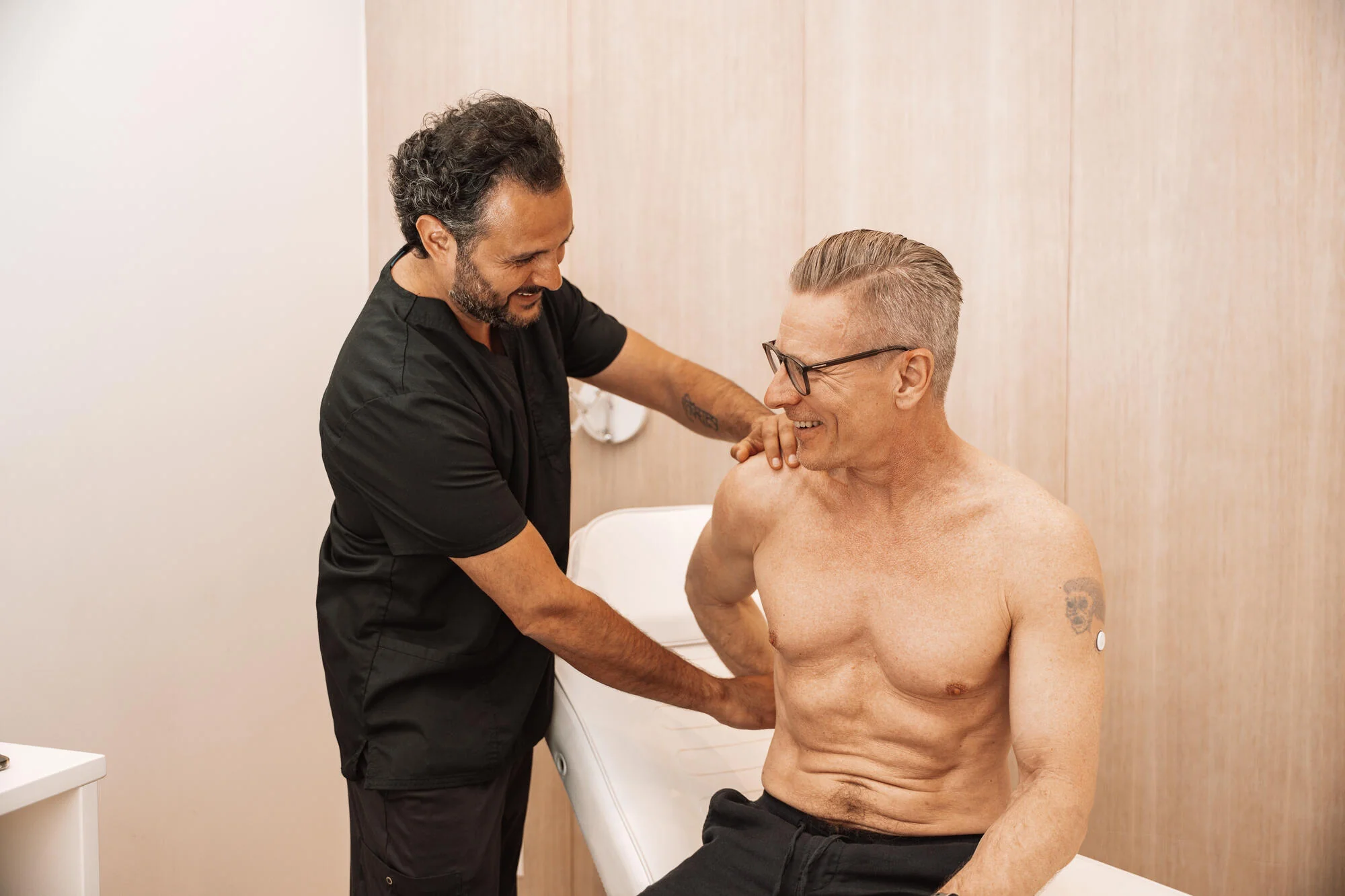
At CellOrtho Marbella, patients with shoulder pain receive a specialist orthopaedic assessment, and the options, both surgical and non-surgical, are explained individually. Some patients come for a second opinion after surgery has been suggested.
Rotator Cuff Injury
Tendon Tears & Tendinopathy
The rotator cuff is a group of four muscles and tendons that stabilise the shoulder and enable rotation and lifting. Tears, chronic degeneration or tendinopathy can cause significant pain, weakness and restricted movement - especially when lifting the arm overhead or reaching behind the back. Treatment depends on the cause and severity and may include physiotherapy, activity modification, medication or injections. PRP has been studied for rotator cuff conditions; most evidence relates to PRP used during surgical repair rather than stand-alone injections. Suitability is decided after assessment.
Frozen Shoulder
Adhesive Capsulitis
Frozen shoulder (adhesive capsulitis) involves a gradual stiffening and tightening of the shoulder joint capsule, severely limiting range of motion and causing persistent pain. It typically progresses through three stages - freezing, frozen and thawing - and can take months or years to resolve through its natural course. Treatment depends on the cause and severity and may include physiotherapy, activity modification, medication or injections. PRP has been studied for frozen shoulder; the evidence is still developing and effects on the recovery timeline are uncertain. Suitability is decided after assessment.
Shoulder Impingement
Subacromial Impingement
Shoulder impingement occurs when tendons or the bursa in the shoulder become compressed during arm movements, causing pain - particularly when reaching overhead or behind the back. It is a common cause of chronic shoulder pain in both active and sedentary individuals. Treatment depends on the cause and severity and may include physiotherapy, activity modification, medication or injections. PRP has been studied for shoulder impingement; the evidence is limited. Suitability is decided after assessment.
Shoulder Arthritis
Glenohumeral Osteoarthritis
Degeneration of the cartilage in the shoulder joint leads to pain, grinding sensations and a progressive loss of mobility. Shoulder osteoarthritis can develop through wear-and-tear over time or follow a previous injury. Treatment depends on the cause and severity and may include physiotherapy, activity modification, medication or injections. PRP has been studied for shoulder osteoarthritis; the evidence is limited and effects on cartilage are uncertain. Suitability is decided after assessment.
Labral Tears
SLAP Lesions
Damage to the labrum - the ring of cartilage surrounding the shoulder socket - can cause deep aching, instability and clicking sensations. SLAP tears are common in overhead athletes, throwing sports and following shoulder dislocations. Treatment depends on the cause and severity and may include physiotherapy, activity modification, medication or injections. PRP has been studied for shoulder labral tears; the evidence is limited. Suitability is decided after assessment.
Bursitis
Subacromial Bursitis
Subacromial bursitis involves inflammation of the fluid-filled sacs that cushion the shoulder joint, causing localised pain, tenderness and restricted movement. It is often associated with shoulder impingement or overuse injuries. Treatment depends on the cause and severity and may include physiotherapy, activity modification, medication or injections. PRP has been studied for subacromial bursitis; the evidence is limited. Suitability is decided after assessment.
Non-Surgical Options for Frozen Shoulder
Frozen shoulder involves stiffness and pain arising from the joint capsule. Assessment considers the stage of the condition, its effect on daily activities and whether another shoulder problem may also be present. Management is discussed in relation to symptoms and individual circumstances.
Conventional management of frozen shoulder may involve physiotherapy, corticosteroid injections (which have anti-inflammatory effects) or manipulation under anaesthetic. PRP therapy may be considered for this condition; research is ongoing, and its effect on the duration of the frozen phase is not well established.
Suitability for any injection is assessed individually, taking account of medical history, previous care and patient preferences. The doctor explains uncertainties, potential risks and follow-up requirements. A surgical opinion may be discussed when indicated; PRP is not a substitute for an indicated procedure.
Shoulder Pain Treatment at CellOrtho Marbella
CellOrtho assesses patients with shoulder pain in Nueva Andalucía, Marbella. We see patients from the UK, Scandinavia, Germany, Ireland and the Netherlands who want a specialist assessment and second opinion. The consultation considers the diagnosis, previous care and individual goals before any treatment decision.
All treatments are performed by Dr. Arvin Yarollahi, a specialist in orthopaedic surgery and traumatology, with additional training in sports medicine and a clinical interest in regenerative medicine, licensed in Sweden, the United Kingdom and Spain. Each patient is assessed individually, and the doctor explains the treatment options according to the condition, its severity and the patient's goals.
We offer a free video consultation so you can discuss your shoulder condition with our medical team before committing to travel or treatment.
Options That May Be Discussed
After assessment, the doctor explains the options considered appropriate for your situation. Depending on the diagnosis, these may include:
Physiotherapy and exercise-based rehabilitation
An individually planned programme based on the diagnosis, movement assessment and activity goals, with partner providers where appropriate.
Pain medication and anti-inflammatory medication
Medication is discussed alongside medical history and potential risks.
Platelet-rich plasma (PRP)
A preparation made from a small sample of your own blood. It may be considered for some conditions after assessment; the evidence differs between conditions.
Learn moreReferral for a surgical opinion where surgery is indicated.
A surgical opinion may be appropriate depending on joint damage, symptoms and individual goals.
Frequently Asked Questions
Common questions about this treatment
Other conditions we treat: Back Pain · Neck Pain · Elbow Pain · Hand & Wrist Pain · Hip Pain · Knee Pain · Foot & Ankle Pain
Ready to Explore Your Options?
Book a free video consultation with our specialist team to discuss your condition and find the right treatment plan for you.
Book a Free ConsultationMedically reviewed by Dr. Arvin Yarollahi, Specialist in Orthopaedic Surgery and Traumatology. Last reviewed .