
Back Pain: Non-Surgical Treatment Options
Back pain is one of the leading causes of disability worldwide - and a common reason patients seek orthopaedic care. Whether your pain stems from a herniated disc, sciatica or radiculopathy, facet joint pain, sacroiliac joint pain or a soft tissue injury, understanding the underlying cause is essential for planning care. Upper back pain and neck pain often present together, so in some cases both areas may be assessed.
At CellOrtho Marbella, patients with back and spinal conditions receive a specialist orthopaedic assessment, and the options, both surgical and non-surgical, are explained individually. Some patients come for a second opinion after surgery has been suggested. Assessment considers symptoms, examination findings, imaging where appropriate and your treatment goals. The doctor discusses the potential risks and limitations of each option, taking account of previous treatment and your medical history.
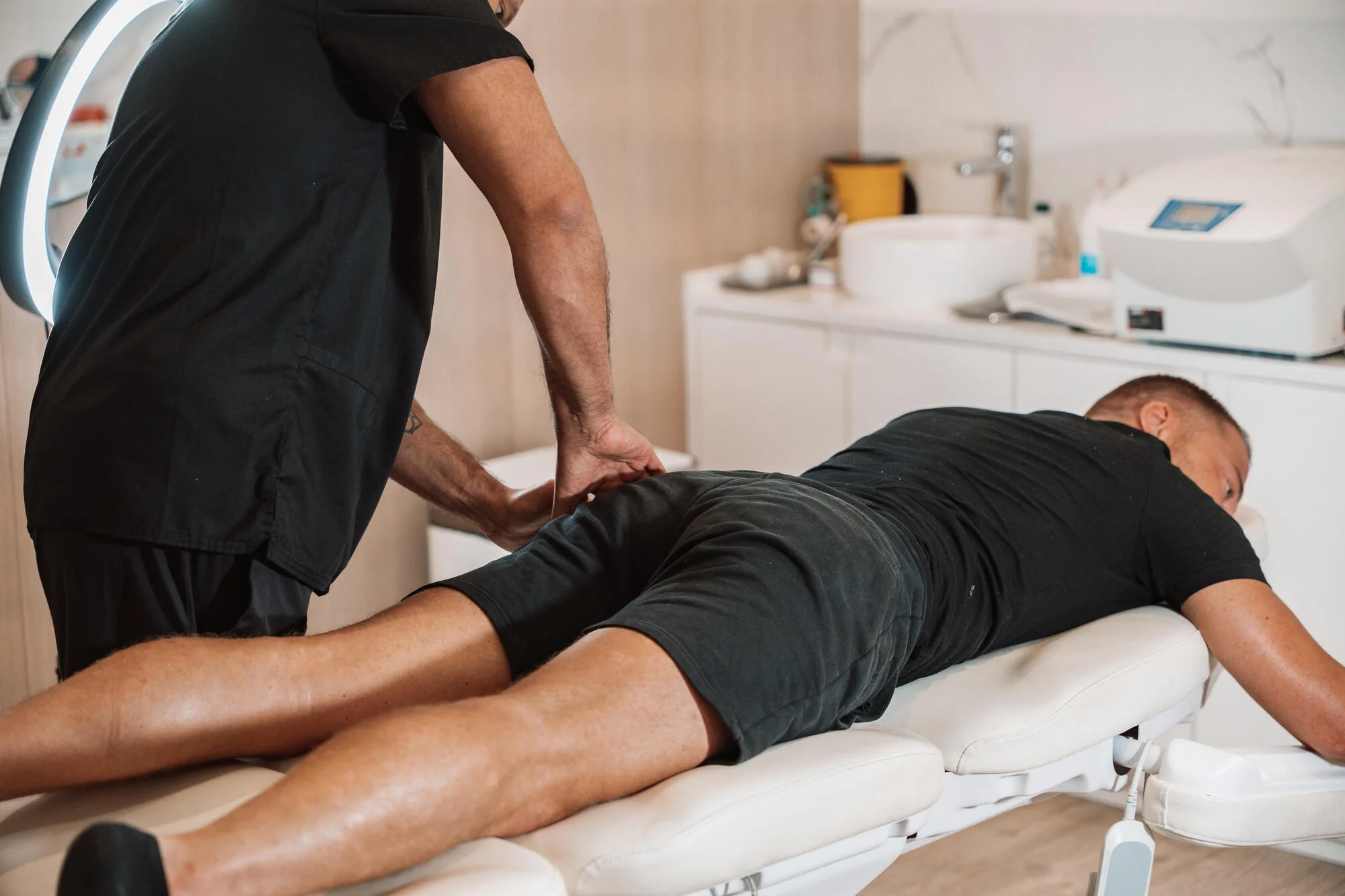
Muscle Strain & Ligament Sprain
Soft Tissue Injury
Acute or chronic overloading of the muscles and ligaments supporting the spine is a common cause of lower back pain. Poor posture, heavy lifting and sudden movements are frequent triggers. Treatment depends on the cause and severity and may include physiotherapy, activity modification, medication or injections. Evidence for PRP in this condition is limited or still developing; suitability is decided after assessment.
Muscle Inflammation
Neck & Upper Back Pain
Inflammation of the muscles in the neck and upper back causes stiffness, soreness and restricted movement - often resulting from poor posture, prolonged screen use, stress or sudden strain. Treatment depends on the cause and severity and may include physiotherapy, activity modification, medication or injections. Evidence for PRP in this condition is limited or still developing; suitability is decided after assessment.
Lower Back Pain
Lumbar Pain
Persistent pain in the lumbar region can stem from muscle fatigue, facet joint irritation, disc degeneration or chronic inflammation. It is a widely reported musculoskeletal complaint and is often aggravated by prolonged sitting, bending or physical inactivity. Treatment depends on the cause and severity and may include physiotherapy, activity modification, medication or injections. Evidence for PRP in this condition is limited or still developing; suitability is decided after assessment.
Herniated Disc
Slipped or Prolapsed Disc
A herniated disc occurs when the soft inner material of a spinal disc pushes through the outer layer, pressing on nearby nerves and causing pain, numbness or weakness - often radiating into the legs or arms depending on the level affected. Surgical referral is common for persistent disc herniation, and the range of management options depends on the degree of disc damage, neurological involvement and duration of symptoms. Treatment depends on the cause and severity and may include physiotherapy, activity modification, medication or injections. Evidence for PRP in this condition is limited or still developing; suitability is decided after assessment.
Sciatica
Radiating Leg Pain from Lumbar Spine
Sciatica describes pain that radiates along the path of the sciatic nerve - from the lower back through the hip and down one or both legs. It is a form of radiculopathy most commonly caused by a herniated disc or bone spur compressing the nerve root in the lumbar spine. Symptoms range from a mild ache to sharp, burning or electric-shock pain, sometimes accompanied by numbness or weakness in the leg. Treatment depends on the cause and severity and may include physiotherapy, activity modification, medication or injections. Evidence for PRP in this condition is limited or still developing; suitability is decided after assessment. PRP does not reverse mechanical nerve compression.
Facet Joint Syndrome
Degenerative Facet Joint Disease
The facet joints connect the vertebrae of the spine and can become inflamed or degenerated through wear-and-tear, injury or poor posture. Facet joint syndrome causes localised back pain that often worsens with extension or rotation movements and may refer pain into the buttocks or thighs. Treatment depends on the cause and severity and may include physiotherapy, activity modification, medication or injections. Evidence for PRP in this condition is limited or still developing; suitability is decided after assessment.
Sacroiliac Joint Dysfunction
Pelvic & Lower Back Joint Inflammation
The sacroiliac joints connect the spine to the pelvis and can become inflamed or unstable through injury, pregnancy, leg length discrepancy or degeneration. SI joint dysfunction causes pain in the lower back, buttocks and sometimes the upper leg - and is frequently misdiagnosed as lumbar disc disease. Treatment depends on the cause and severity and may include physiotherapy, activity modification, medication or injections. Evidence for PRP in this condition is limited or still developing; suitability is decided after assessment.
Non-Surgical Options for Herniated Disc
Management of a herniated disc depends on symptoms, neurological findings and imaging. Conventional options include activity modification, physiotherapy, medication and, in selected cases, injections. Surgery may be appropriate for persistent symptoms or neurological involvement; assessment explains which options are realistic for the individual case.
PRP therapy is prepared from a sample of your own blood. It has been studied for disc-related symptoms, but evidence is limited and still developing. Suitability, potential risks and uncertainty are discussed individually after assessment. PRP is not a proven way to prevent surgery and is not a substitute for surgery when surgery is indicated.
Not every case of disc herniation is suitable for non-surgical treatment - the degree of disc damage, neurological involvement and duration of symptoms all play a role. The best way to determine whether a non-surgical pathway is appropriate for your specific case is through a medical consultation with Dr. Arvin Yarollahi, a specialist in orthopaedic surgery and traumatology with additional training and clinical experience in spine care.
Back Pain Treatment at CellOrtho Marbella
CellOrtho treats back pain and spinal conditions in Nueva Andalucía, Marbella. We see patients from the UK, Scandinavia, Germany, Ireland and the Netherlands who want a specialist assessment and second opinion. Assessment includes a review of symptoms, previous treatment and relevant imaging before the options are discussed.
Dr. Arvin Yarollahi, a specialist in orthopaedic surgery and traumatology with additional training in spine care, also has a clinical interest in regenerative medicine - meaning he can assess your case with a full understanding of both the surgical and non-surgical options available to you, and provide an honest recommendation based on your specific condition.
We offer a free video consultation so you can discuss your back condition with our medical team before committing to travel or treatment.
Options That May Be Discussed
After assessment, the doctor explains the options considered appropriate for your situation. Depending on the diagnosis, these may include:
Physiotherapy and exercise-based rehabilitation
An individual programme based on symptoms, mobility and activity goals, with partner providers where appropriate.
Pain medication and anti-inflammatory medication
Medication options are discussed alongside medical history and potential risks.
Platelet-rich plasma (PRP)
A preparation made from a small sample of your own blood. It may be considered for some conditions after assessment; the evidence differs between conditions.
Learn moreReferral for a surgical opinion where surgery is indicated.
Surgical assessment may be appropriate depending on symptoms and clinical findings.
Frequently Asked Questions
Common questions about this treatment
Other conditions we treat: Neck Pain · Shoulder Pain · Elbow Pain · Hand & Wrist Pain · Hip Pain · Knee Pain · Foot & Ankle Pain
Ready to Explore Your Options?
Book a free video consultation with our specialist team to discuss your condition and find the right treatment plan for you.
Book a Free ConsultationMedically reviewed by Dr. Arvin Yarollahi, Specialist in Orthopaedic Surgery and Traumatology. Last reviewed .