
Elbow Pain: Non-Surgical Treatment Options
Elbow pain - whether from tennis elbow, golfer's elbow or a more complex joint condition - can make everyday tasks surprisingly difficult, from lifting a cup of coffee to typing at a keyboard. The elbow relies on a complex system of tendons, ligaments and nerves that are highly susceptible to overuse injury and chronic degeneration. Because grip loading affects both the elbow and the wrist, in some cases elbow pain may occur alongside hand and wrist pain.
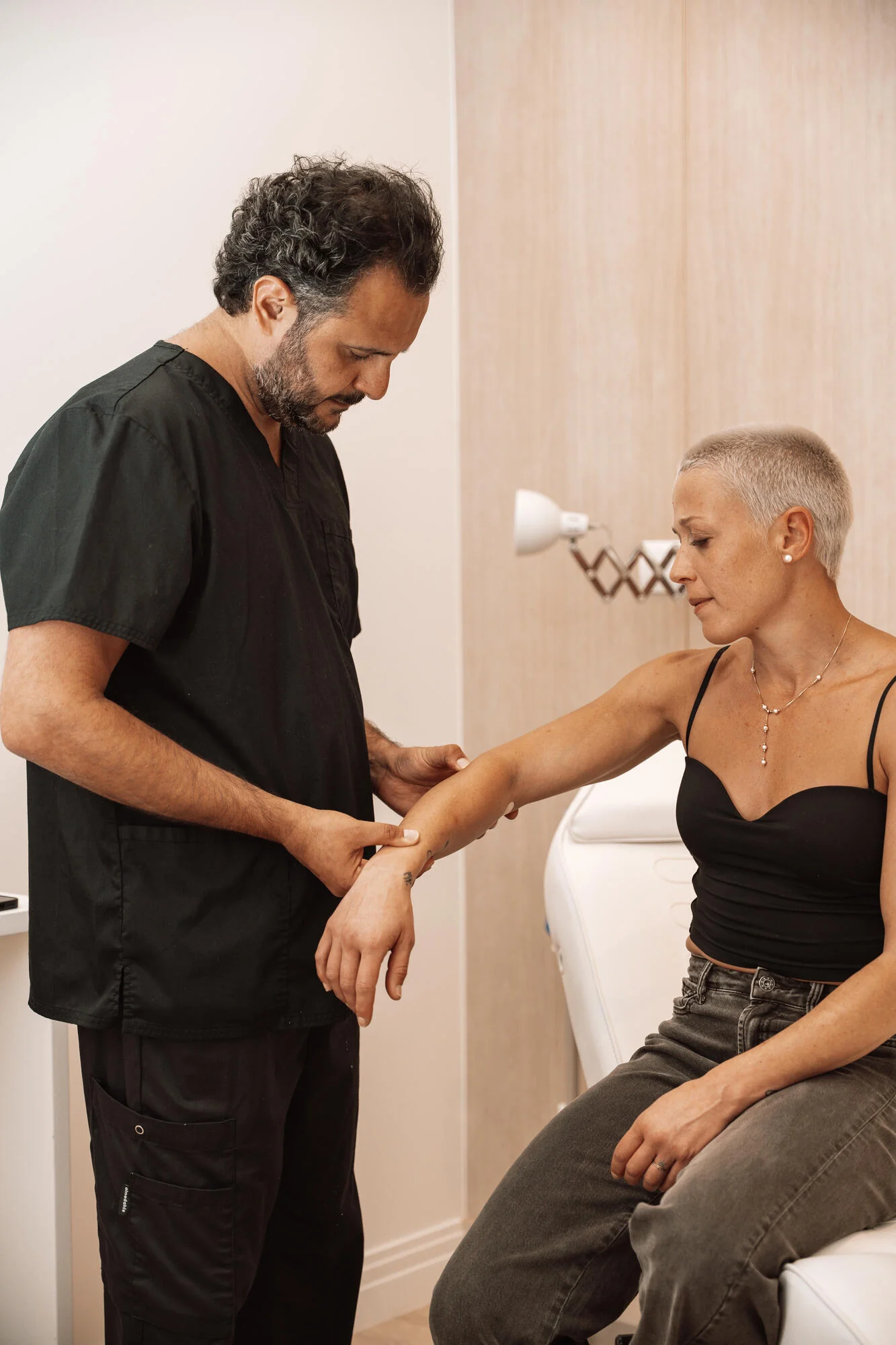
At CellOrtho Marbella, patients with elbow pain receive a specialist orthopaedic assessment, and the options, both surgical and non-surgical, are explained individually. Some patients come for a second opinion after surgery has been suggested. PRP is not a proven way to prevent surgery and is not a substitute for surgery when surgery is indicated.
Tennis Elbow
Lateral Epicondylitis
Tennis elbow (lateral epicondylitis) is caused by overuse and degeneration of the tendons attaching the forearm muscles to the outer elbow. It produces pain and tenderness on the outside of the elbow, often worsening with gripping, lifting or wrist extension. Despite its name, it commonly affects people who perform repetitive manual tasks - not just tennis players.
Treatment may include activity modification, physiotherapy, medication or injections. PRP has been studied for tennis elbow, but comparisons with cortisone are mixed and a Cochrane review found uncertain evidence; suitability is decided after assessment.
Golfer's Elbow
Medial Epicondylitis
Golfer's elbow (medial epicondylitis) affects the tendons on the inner side of the elbow, causing pain, weakness and tenderness when gripping, twisting or flexing the wrist. It is common in manual labourers, golfers, climbers and racquet sports players. It involves chronic tendon degeneration. Treatment may include activity modification, physiotherapy, medication or injections. Evidence for PRP in golfer's elbow is limited and separate from tennis elbow; suitability is decided after assessment.
Elbow Arthritis
Osteoarthritis & Rheumatoid Arthritis
Degeneration or chronic inflammation in the elbow joint causes stiffness, swelling and difficulty fully extending or bending the arm. Elbow arthritis may develop from previous injuries, prolonged overuse or underlying inflammatory conditions such as rheumatoid arthritis, which requires appropriate rheumatological management. Management depends on the cause and may include physiotherapy, medication, injections or surgery. Evidence for PRP in elbow osteoarthritis is limited.
Olecranon Bursitis
Elbow Bursitis
Olecranon bursitis involves swelling of the bursa at the tip of the elbow, creating visible swelling and localised tenderness. It can result from prolonged pressure on the elbow, trauma or underlying inflammatory conditions. Bursitis can occasionally become infected, which requires prompt medical assessment rather than PRP treatment. For non-infected cases, management may include pressure avoidance, activity modification and medication. Evidence for PRP in bursitis is limited; suitability for any injection requires assessment.
Ligament Sprains
UCL & Lateral Ligament Injuries
Sprains or partial tears of the elbow ligaments - including the ulnar collateral ligament (UCL) - cause instability, pain and difficulty carrying or gripping objects. These injuries are common in throwing athletes and following acute trauma. Management may include activity modification, rehabilitation, bracing or a surgical opinion, depending on stability and injury severity. Evidence for PRP in elbow ligament injuries is limited; suitability requires individual assessment.
Non-Surgical Options for Tennis Elbow
Tennis elbow is a common cause of pain during gripping and lifting. Assessment considers tendon loading, symptoms, work and sports activities, and previous management before options are discussed.
Conventional treatment for tennis elbow typically involves rest, physiotherapy and cortisone injections, with suitability depending on symptoms and medical history. PRP therapy has also been studied: it involves injecting a platelet preparation from the patient's own blood into the area around the damaged tendon. Whether this leads to structural tendon repair is not established, and suitability depends on individual assessment.
Clinical studies comparing PRP to cortisone for lateral epicondylitis have produced mixed results. A Cochrane review of autologous blood and PRP injections for lateral elbow pain found the overall evidence to be uncertain, and outcomes should be discussed individually with your clinician.
Golfer's elbow (medial epicondylitis) is a separate condition to tennis elbow, with its own evidence base. PRP therapy may be considered for golfer's elbow after individual assessment.
Elbow Pain Treatment at CellOrtho Marbella
CellOrtho treats elbow pain patients from across Europe in Nueva Andalucía, Marbella. We see patients from the UK, Scandinavia, Germany, Ireland and the Netherlands who want a specialist assessment and second opinion. The consultation reviews symptoms, previous investigations and treatments, and the options appropriate to the diagnosis.
All treatments are performed by Dr. Arvin Yarollahi, a specialist in orthopaedic surgery and traumatology, with additional training in sports medicine and a clinical interest in regenerative medicine, licensed in Sweden, the United Kingdom and Spain.
We offer a free video consultation so you can discuss your elbow condition with our medical team before committing to travel or treatment.
Options That May Be Discussed
After assessment, the doctor explains the options considered appropriate for your situation. Depending on the diagnosis, these may include:
Physiotherapy and exercise-based rehabilitation
Exercises and rehabilitation tailored to the diagnosis and individual assessment, with partner providers where appropriate.
Pain medication and anti-inflammatory medication
Medication options and their risks are discussed in relation to your medical history.
Platelet-rich plasma (PRP)
A preparation made from a small sample of your own blood. It may be considered for some conditions after assessment; the evidence differs between conditions.
Learn moreReferral for a surgical opinion where surgery is indicated.
Surgical options may be discussed according to symptoms, examination and imaging findings.
Frequently Asked Questions
Common questions about this treatment
Other conditions we treat: Back Pain · Neck Pain · Shoulder Pain · Hand & Wrist Pain · Hip Pain · Knee Pain · Foot & Ankle Pain
Ready to Explore Your Options?
Book a free video consultation with our specialist team to discuss your condition and find the right treatment plan for you.
Book a Free ConsultationMedically reviewed by Dr. Arvin Yarollahi, Specialist in Orthopaedic Surgery and Traumatology. Last reviewed .