
PRP Facial Treatment: Patient Information
PRP for the skin may be considered as part of an individual treatment plan following medical assessment. Its suitability depends on the skin concern, medical history and individual circumstances. The treating physician will determine whether this option is appropriate.
Book a Free Video Consultation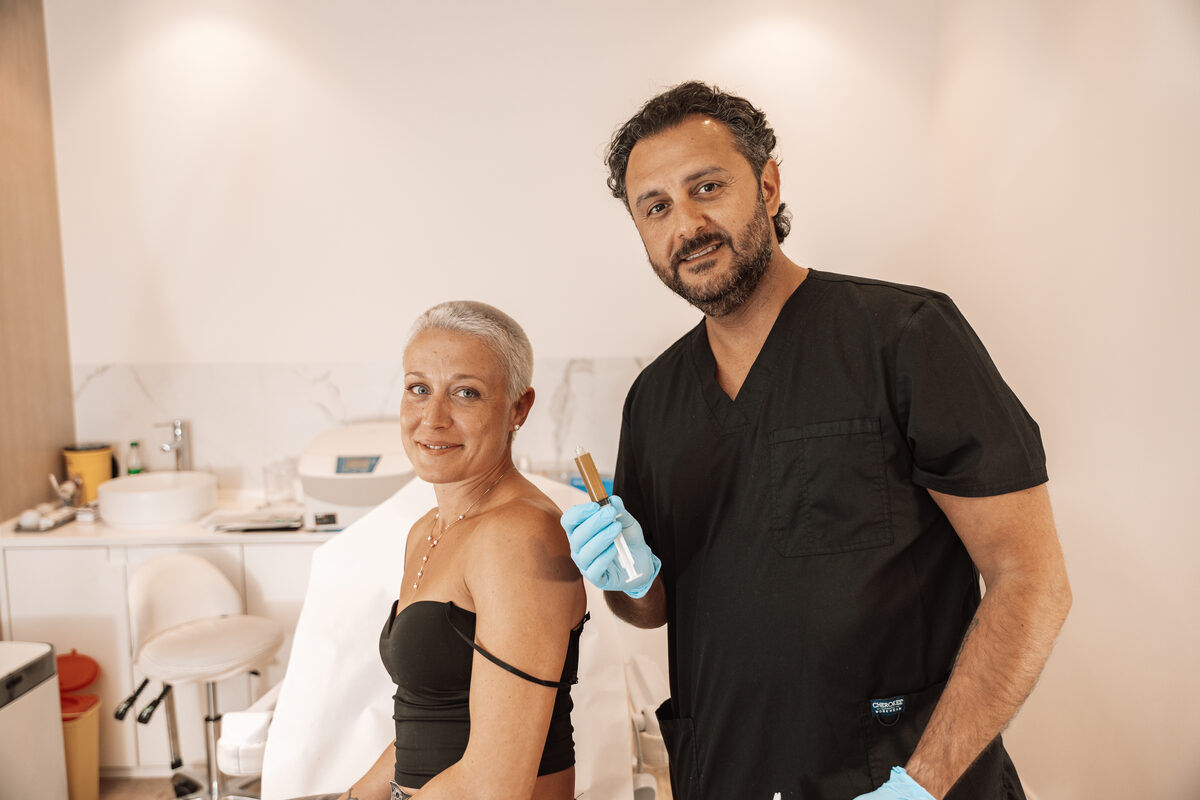
What is a PRP facial?
PRP stands for platelet-rich plasma. A PRP facial is a non-surgical procedure in which platelet-rich plasma, prepared from a small sample of the patient's own blood, is applied to the skin of the face using microneedling or fine injections.
Platelets are small cell fragments in the blood that contain growth factors, which are naturally occurring signalling proteins. In PRP, the plasma has been processed so that it contains a higher concentration of platelets than normal blood. Unlike dermal fillers, PRP does not add volume.
"Vampire Facial" is a registered trademark of a specific branded protocol developed by Dr Charles Runels and licensed to certified providers. CellOrtho offers PRP facial treatment and is not a licensed Vampire Facial provider.
How is it prepared?
A small blood sample is taken from the arm and placed in a centrifuge, a machine that spins the sample so that its components separate. The platelet-rich plasma layer is then drawn off and prepared for application to the skin.
The preparation process is similar to the one described on our main PRP page. What differs for the skin is the way the plasma is delivered, either by microneedling or by fine injections into the upper layers of the skin.
Read about how PRP is preparedWhich areas may be treated?
PRP is commonly applied to the full face, and it can also be used on the neck, décolletage and the backs of the hands. The area under the eyes, where the skin is thin and delicate, is also frequently asked about. The areas to be treated, if any, are agreed with your doctor at your assessment.
What happens during the appointment?
An appointment takes around 30 to 45 minutes and is carried out by a licensed medical doctor. A small blood sample is taken from your arm and processed in the centrifuge.
A topical anaesthetic cream is applied to the skin beforehand to reduce sensation, and no general anaesthetic is used. The plasma is then delivered into the skin using microneedling or fine injections. You leave the same day with simple aftercare instructions.
If PRP is considered, the number of sessions and the interval between them are agreed individually with your doctor.
Who decides whether it is suitable?
Suitability is always decided by the treating doctor after an individual medical assessment. This takes into account your skin concern, your medical history, the medication you take and your individual circumstances.
PRP may not be appropriate for patients with certain blood disorders, active skin infections, active acne flares in the treatment area or on specific medications. Other options may be more suitable for some patients.
Possible side effects
Because PRP is prepared from your own blood, the risk of an allergic reaction is very low. As with any skin procedure, there can be temporary redness similar to mild sunburn, slight swelling, pinpoint marks or bruising, and rarely infection. Your doctor will explain these before any procedure.
Frequently Asked Questions
Common questions about this treatment
Important Medical Disclaimer
This information is provided for educational purposes only and does not constitute medical advice. Suitability for any procedure varies between individuals and can only be decided after an individual medical assessment. This information is not intended to replace appropriate medical care. Always consult a qualified doctor.
Medically reviewed by Dr. Arvin Yarollahi, Specialist in Orthopaedic Surgery and Traumatology. Last reviewed .
Speak with our medical team about your case
A first video consultation is free and lets the doctor understand your situation before any decision is made.
Book a Free Video Consultation